
Who are you when work is taken out of the equation?

“Hi…..my name is, my name is, my name is Slim Shady.” – Eminem
Imagine you walked into a networking event tonight, unemployed. Someone approaches, extends a hand and asks: “So, what do you do?”
Would you feel as comfortable answering?
We default to sharing our names and our jobs because work consumes so much of our lives that it becomes fused with our identity. Modern Gov estimates we spend up to a third of our adult waking life at work. The BBC explored this in a piece titled Why We Define Ourselves By Our Jobs, noting that occupational titles offer immediate social standing, a sense of prestige, and a way to quickly signal your values or skill set to the world.
And so when we meet a stranger, and they ask “what do you do?”, the answer arrives automatically. No thought required. Our jobs give us a sense of value and pride, a living, relationships and status. There are benefits to this, no question. But it is worth asking: what does it cost us?
The Risks of a Job-Defined Identity
“If you tie [your self-worth] to your career, the successes and failures you experience will directly affect your self-worth,” says Wilson. “And because we live in a society where careers are less likely to be lifelong, if we switch or find ourselves out of a job, it can also become an identity crisis.”
– BBC Why We Define Ourselves By Our Jobs
By introducing ourselves with a job title, we signal two things immediately: our social status and the lens through which we want to be seen. For most of us, this happens subconsciously. Like brushing your teeth or walking, you do not think about it. You just do.
But we are so much more than our job titles.
What happens when someone deeply attached to their title is made redundant? It can strip away more than a salary. It leads to a profound sense of lost purpose and grief. Retirement anxiety is a real fear for the same reason. Leaving the workforce can be disorienting for those who rely entirely on their professional title for a sense of belonging and meaning.
So how do we cultivate a more whole sense of identity? We have to rediscover our roots.
What Else Shapes Our Identities
I originate from Ghana, and we have a sacred traditional naming practice. Historically, the Akan tribe were thought to be the original settlers in the Gold Coast (modern-day Ghana). They believed that the day a person is born is not a coincidence but a spiritual assignment. Each day of the week carried both a masculine and feminine name.
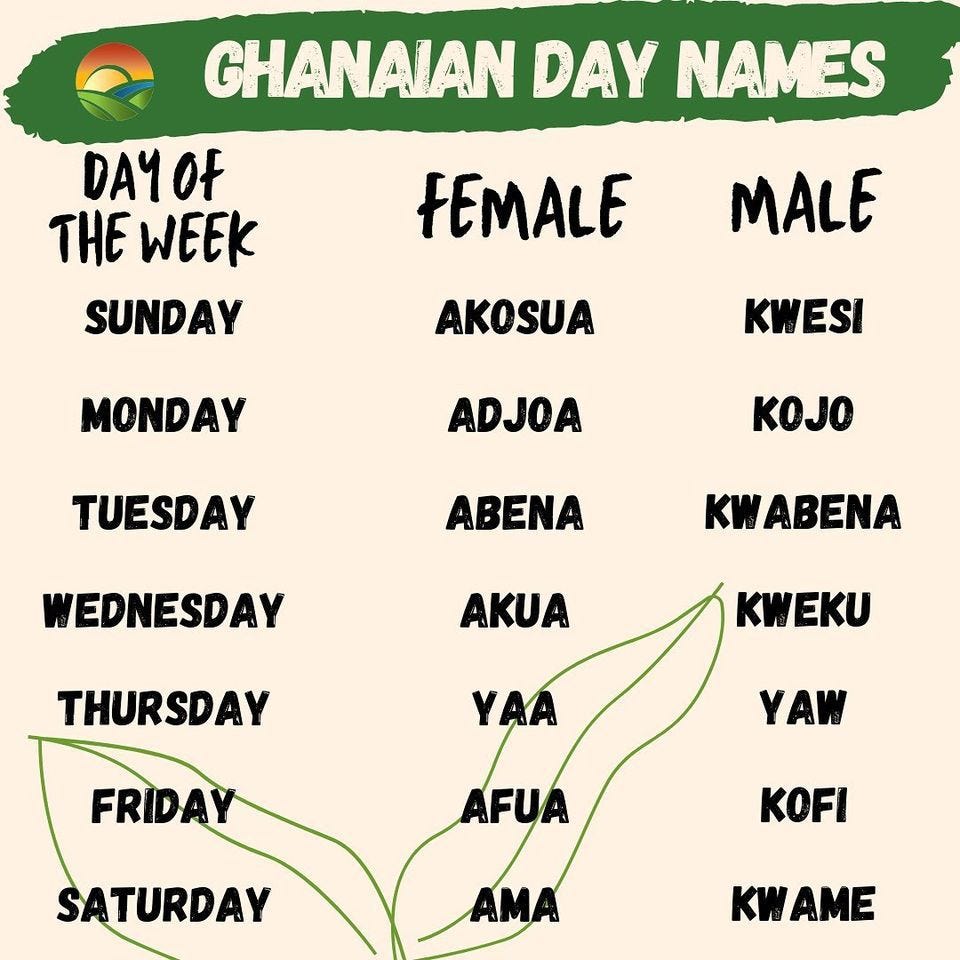
I was born on a Monday, so my name is Kojo. My mum occasionally calls me by this name, and when I am in Ghana, it is the name I am known by. My dad was also born on a Monday, and so was my grandad, which makes me a third-generation Kojo Oduro Ayim. In Ghanaian tradition, Monday is regarded as the day of the moon, and people born on this day are seen as emotionally stable, peaceful, and nurturing.
My mother is also a devout Christian, so she named me after Andrew, the first disciple of Jesus in the Bible. There is no book in the Bible named after Andrew. Beyond being the brother of Simon Peter, we do not know too much about him. What I learned first from my mum, then through my own reading, was that Andrew was humble, peaceful, and a connector. He introduced his brother Peter to Jesus, the same Peter who became a pillar of the Church. He brought the young boy with the loaves and fishes to Jesus during the feeding of the 5,000, again serving as a connector, working quietly behind the scenes.
Now, all of this could be meaningless, or it could have profound meaning, depending on your perspective. What is undeniable is that our life experiences shape the stories we tell ourselves and therefore influence our identities. From backpacking across South America to experiencing grief from losing a loved one, these experiences matter just as much as your job title. Perhaps more.
In 2019, I asked 12 friends, family members and former colleagues the same question: “If you could name just one or two things that come easily to me but hard to others, what comes to mind?”
A few responses that struck me:
“Connecting deeply with new people in an authentic way, and simplifying complex situations through the use of metaphors.”
“Connecting people from all walks of life, investing in relationships for the long haul, not short-term and transactional like so many people.”
“There is something special about the way you deliver a message and make people feel like they can achieve anything.”
You can see the same thread running through what I learned about my names and what people who know me well reflected back. Connector. Nurturer. Quietly behind the scenes.
Where to Start
Consider asking the same question I did to close friends, family and former colleagues: “What do you think comes easy to me but difficult to others?”
Create time sanctuaries. Intentional space to reflect, read, research and think without interruption. I timeblock at least five hours across a single week in my calendar for this. It is the opposite of context switching and doom scrolling, so you may have some initial withdrawal symptoms.
Become a Tracker. I believe we should all become trackers of our own lives, understanding deeply our values, strengths, what we enjoy and what lights us up. This is who we are, not simply what we do for work. I journal, reflect on past entries, and often walk through nature or swim to let my mind wander. Take pleasure in the small things that bring you pleasure.
Build Reflection Rituals. I do this every Friday morning using three simple questions, inspired by my good friend Anne-Laure Le Cunff, author of Tiny Experiments: Plus (what worked this week?), Minus (what did not?), and Next (what will I do differently?).
Find Your Tribes. They say you become more like the people you surround yourself with. Finding communities interested in who you are, not what you do for work, gives you a safe space to nurture your whole identity.
These practices work together to help reinforce your whole identity, which is what you are cultivating beyond what you do for work. The equation is simple: in order to feel more fulfilled, you need to operate from your unique identity, which is rooted in meaningful endeavours that may include work, but are not exclusively defined by it.
So the next time someone asks what you do, try answering with who you are. Not your title. Not your company. The version of you that existed before the job, and will remain long after it. That person has always been the more interesting introduction.
Love & Light,
Andy Ayim MBE
PS. To all my FS friends, On June 30th I am co-hosting an event in London on AI, Humans & the future of financial services. Limited spaces so secure your seat: https://luma.com/too70iez