
Three practices for deciding what to keep private and what to share.

Growing up, my parents had a saying they repeated so often it became part of me:
“Don’t tell everyone your business. Not everyone wants the best for you.”
At the time, I thought it was just a West African parent thing. Protective. Maybe a little guarded.
But the older I get, the more I understand it as wisdom.
There is a version of success that is performed before it is earned. And social media has made that temptation louder than ever.
I want to talk about the other version.
When I shared a post recently about building in private, the response surprised me. Not the volume of it, but the depth. People weren’t just agreeing. They were confessing. Sharing the quiet seasons they’d been through. The grief. The career missteps. The years that looked like nothing from the outside but were actually everything.
One comment stopped me completely. Tasha wrote:
“What I thought were lost years was building in private. The sobbing, the breaking, was all private building for re-entering. God never forgot me. He was shaping me.”
I’ve been sitting with that ever since.
So today I want to go deeper. Not just on why building in private matters, but on how I actually decide what stays private and what I share. Three practices that have shaped how I think about this.
1. Direction Over Speed
My dad passed away in 2013. I was 25.
My first instinct was to run.
I didn’t take time to grieve. I didn’t sit with my family. I didn’t let myself be still. I went straight back into work, frantic, trying to build my way out of the pain.
Looking back, that was the only role in my career that simply didn’t work for either party. And I know exactly why. I never slowed down long enough to understand what I actually needed. I just rushed to keep building. I mistook speed for progress. I was moving, but I had no idea where I was going.
It was a mistake.
Since then, I’ve watched friends share similar stories. Career transitions. Grief. Overcoming adversity. The instinct is almost universal: push through. Keep moving. Stay busy.
But what those quiet seasons are actually asking of you is the opposite. Rest. Recover. Be still. Refill your cup while you sit with the harder questions. What is my purpose right now? Who am I becoming? Where am I actually being called? How can I be useful? What gets me out of bed feeling excited for the day ahead?
Those answers don’t come from speed. They come from stillness. And they only come in private. It is more of a feeling you get internally rather than a response from something you share externally.
In those seasons, you don’t want to build anything publicly. You want to do the inner work first. Question your identity, your strengths, your purpose and your direction. Then come back out when you’re ready. Not when they are ready, when you are.
When you rush through those seasons, you risk building the wrong thing, in the wrong direction, for the wrong reasons, for the wrong people. Direction always matters more than speed.
2. Journaling as Your Extraction Phase
I write approximately 20,000 words a year in my digital journal.
I process. I reflect. I categorise. I waffle. I vent. I just get out whatever is on my mind. I sit with what I’m going through until I actually understand it. Sometimes, I settle on being at peace with not understanding too. Regardless of the ups and downs of life, I try to consistently be authentically Andy. Journaling brings that balance.
And I share about one percent of it publicly.
My journal is my private laboratory. The messy thinking lives there. The contradictions. The doubts. The half-formed ideas that aren’t ready for anyone else to see yet. The prayers. The questions I don’t have answers to.
But without that space, I wouldn’t know what to share at all.
Journaling isn’t just therapy, although it is that too. It’s discernment. It’s what I call the extraction phase — the ongoing process of sorting through what I’ve learned, what I’ve processed, what I’m ready to offer, and what still belongs to me alone.
By the time something appears in this newsletter, it has already been lived with. Questioned. Written and rewritten in private, many times over.
That one per cent that makes it out into the world is the distilled version. Everything else was the work of getting there. This isn’t procrastination for perfection; it is deliberate practice before progressing.
If you don’t have a journaling practice, I’d encourage you to start small. Not to share. Just to process. Give yourself a space where you don’t have to perform, where you can be honest with yourself about what’s actually going on.
You might be surprised what surfaces.
3. Be Deliberate About What You Share, and to Whom
I think my parents knew deep down that I love people and found it easy to form meaningful relationships with people. Although they shared guardrails to warn me, I knew it wouldn’t stop me.
99% percent of my building stays private.
The mastery work. The continuous learning. The experiments that haven’t been resolved yet. None of that gets posted. And that is entirely on purpose.
Because here’s what happens when you share everything in real time: you create pressure to keep up appearances. You start performing your process rather than living it. You end up chasing the status instead of running your own race if you are not careful. You feel the need to maintain a version of yourself publicly that may not match where you actually are privately. We have to ponder the questions before sharing anything publicly:
Why am I sharing this?
Who do I want to share this with?
Why now?
There’s also something important about timing. Think about a biography. When you look back and connect the dots across someone’s life, the story makes sense. The setbacks led somewhere. The detours had a purpose. The hard seasons produced something.
But if you’re narrating every moment as you go through it, before you know what it means, you risk adding noise instead of signal. You risk sharing something that isn’t ready, under pressure that isn’t helpful.
I post on LinkedIn because I believe in being signal in a sea of noise. But what you see is curated. It’s intentional. I’m very deliberate about posting to the community when I’m actually ready. This raison d’être becomes even more important with the noise produced by AI-slop.
The goal isn’t to hide. The goal is to play your long game, not everyone else’s.
You know you best. Trust that.
A Founders Dilemma
The question I get asked most by founders is this: How do I know when it’s the right time to go public? When do I tell the world I’m building something?
Here’s my honest answer: going public isn’t a single moment. It’s a filter.
The most important question isn’t when. It’s who.
When building in public as a founder, the voices that matter most are the people you’re actually building for. Not your former colleague, not your parents, not your closest friends. Your potential customers. The communities you’re serving. Their validation and feedback are signals. Most other voices, however well-meaning, are noise.
So before you post, ask yourself: Am I sharing this to get genuine feedback from the people this is designed for? Or am I sharing it to feel seen, to build hype, or because everyone else seems to be doing it?
If it’s the former, go ahead. Share early, share often, and listen hard to what comes back. That’s not building in public for performance. That’s building in public for learning.
If it’s the latter, sit with it a little longer. The world will still be there when you’re ready.
A few honest signals that you might be ready:
You can hear “I don’t get it” without it derailing you. Early ideas are fragile. If criticism from strangers would cause you to abandon something that deserves more time, protect it a little longer.
You have something to show, not just something to say. Announcing you’re building something and demonstrating early proof are very different things. The latter earns genuine attention and real feedback.
You know the story well enough to tell it clearly. If you can’t yet articulate what you’re building, who it’s for, and why it matters, you probably need more private time with it first. Clarity is a good signal of readiness.
The fear is about exposure, not execution. There’s healthy caution, and there’s fear of being seen. If you’re delaying because you’re still refining something real, that’s discernment. If you’re delaying because you’re afraid of judgment, going public might actually help you move through it.
Private and public are not opposites. They’re different seasons of the same work.
Build in private until you’re ready. Then share with the right people for the right reasons.
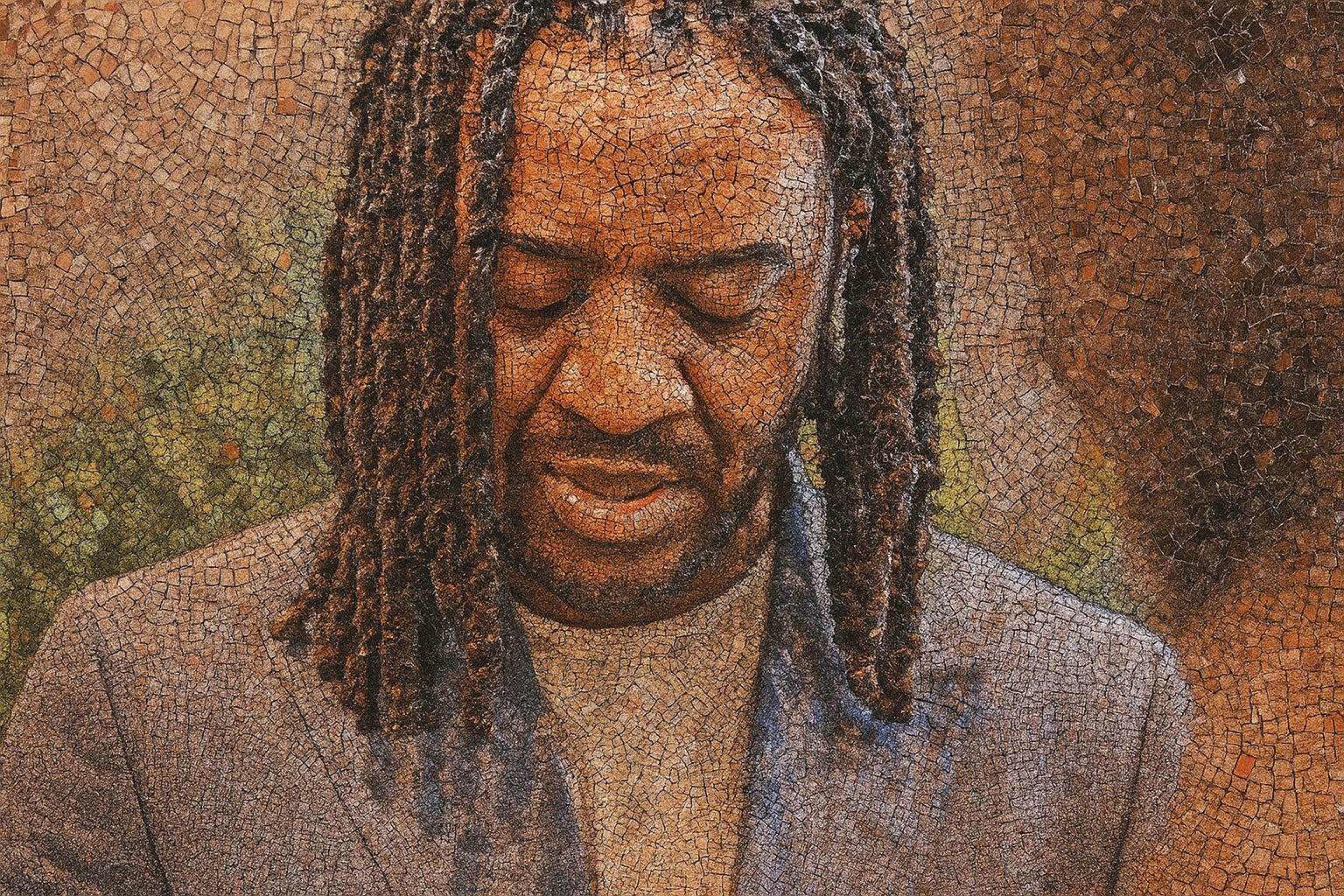
A mosaic in an artist’s hands looks like fragments for a long time. Broken pieces. Scattered. Nothing obviously coherent. And then one day, it all makes sense. That is what years of private formation feel like from the inside. Disjointed. Sometimes confusing. Sometimes painful.
I lost my dad, my mentor, my job, my business. All fragments of my life I could have discarded as worthless, useless, a waste of time, things that didn’t make sense. But faith, family, friends, reflective walks and journaling served as glue to piece it all together.
Like a mosaic in the hands of an artist, it will all make sense when you’re ready to reveal it, when you are ready to reveal your Masterpiece.
But the work of getting there? That happens in the quiet.
What are you building in private right now? And what’s your signal for knowing when it’s time to share?
Love & Light,
Andy Ayim MBE